
01 Sep Trade Under Pressure: When Policy Meets Geopolitical Reality
Trade Under Pressure: When Policy Meets Geopolitical Reality
Middle East Bombings Heighten Global Trade Risks; All Eyes on the Strait of Hormuz
The most urgent story this month is the series of bombings and escalating military conflict between the United States and Iran. The fallout for global trade remains uncertain, but a big concern is Iran’s threat to close the Strait of Hormuz, the world’s most critical oil shipping chokepoint.
Roughly 20% of global oil and gas flows through this narrow passage, and any disruption could send shockwaves through energy markets, drive up shipping and insurance costs, and trigger inflation worldwide. Major economies in Asia, Europe, and beyond are bracing for possible supply chain disruptions and price volatility as the situation evolves.
What’s the Impact?
- Shipping Delays: Expect extended transit times, especially for Asia–Europe and Asia–U.S. routes.
- Rising Costs: Spot rates and surcharges are climbing as carriers adjust to new risks.
- Supply Chain Uncertainty: Manufacturers and retailers are scrambling to secure alternative routes and inventory buffers.
Legal Landscape: No Relief Yet on Tariffs
While security dominates the headlines, the tariff environment remains just as volatile. Here’s where things stand:
- The contested “Liberation Day” tariffs are still in force. In May, a lower court found the administration had exceeded its authority, but the U.S. Court of Appeals for the Federal Circuit extended a stay, so no rollback yet.
- Next milestone: A hearing is scheduled for July 31, with no immediate relief expected before late summer.
- Supreme Court status: A petition for review is pending, but a final verdict could stretch into mid-2026.
US–China Tariff Breakdown
Tariffs on Chinese goods remain layered and punitive, with effective rates depending on product category:
- Baseline Tariff (IEEPA): 10% on all Chinese imports
- Fentanyl-linked Goods: +20% (Total: 30%)
- Section 301 Goods (e.g., tech, machinery): +25% (Total: 35%)
- Steel-content Appliances (effective June 23): +50% on the steel portion (e.g., fridges, washers)
Average U.S. tariff on Chinese goods: Over 50%
China’s average tariff on U.S. goods: ~33%
Trade Talks & Global Responses
- U.S.–China Framework Deal (London, June 10): Some reciprocal tariffs eased to 10%, but most compound tariffs remain above 30%.
- EU–U.S. Standoff: The EU is preparing 25% retaliatory tariffs on American whiskey and soybeans if the U.S. moves forward with a proposed 50% tariff on EU imports by July 9.
- U.K.–U.S. Agreement: The U.K. is the only major economy to formalize a post-Liberation Day trade deal with the U.S.
Logistics & Supply Chain Trends
- Air Freight: U.S.–China cargo volumes dropped sharply in June, following a brief May spike likely driven by inventory hedging.
- Ocean Freight: Rates are falling on many West Coast routes, softening Peak Season Surcharges.
- Shifting Strategies: Companies are responding with sourcing diversification, AI-powered logistics, and increased interest in SCaaS (Supply Chain as a Service) models to remain resilient.
What Does It Mean for Your Business?
Don’t go it alone. We’ve been hearing from too many businesses left to figure things out on their own, navigating shifting tariffs, sourcing disruptions, and customs confusion without the support they need.
We believe no one should have to face these challenges solo. You deserve a partner who’s proactive, informed, and fully invested in your success.
Whether it’s reviewing sourcing strategies, building contingency plans, or staying ahead of the next policy shift, we’re here to help you move fast, move smart, and move with purpose.
Due to the speed of tariff news, we will be updating this LinkedIn newsletter with the latest info.
Comercio Bajo Presión: Cuando la Política se Encuentra con la Realidad Geopolítica
Los bombardeos en Oriente Medio aumentan los riesgos para el comercio global; todas las miradas puestas en el Estrecho de Ormuz
La noticia más urgente de este mes es la serie de bombardeos y la escalada del conflicto militar entre Estados Unidos e Irán. Las consecuencias para el comercio global aún son inciertas, pero una gran preocupación es la amenaza de Irán de cerrar el Estrecho de Ormuz, el punto de paso más crítico del mundo para el transporte de petróleo.
Aproximadamente el 20% del petróleo y gas mundial transita por este estrecho, y cualquier interrupción podría sacudir los mercados energéticos, aumentar los costos de envío y seguros, y desencadenar inflación a nivel mundial. Las principales economías de Asia, Europa y otras regiones se están preparando para posibles interrupciones en la cadena de suministro y volatilidad de precios a medida que evoluciona la situación.
¿Cuál es el impacto?
- Retrasos en los envíos: Se esperan tiempos de tránsito extendidos, especialmente en las rutas Asia–Europa y Asia–Estados Unidos.
- Aumento de costos: Las tarifas spot y los recargos están subiendo a medida que las navieras se adaptan a los nuevos riesgos.
- Incertidumbre en la cadena de suministro: Fabricantes y minoristas se apresuran a asegurar rutas alternativas y reservas de inventario.
Panorama Legal: Sin Alivio Aún en los Aranceles
Aunque la seguridad domina los titulares, el entorno arancelario sigue siendo igual de volátil. Así está la situación:
- Los controvertidos aranceles del “Día de la Liberación” siguen vigentes. En mayo, un tribunal inferior determinó que la administración había excedido su autoridad, pero el Tribunal de Apelaciones del Circuito Federal de EE. UU. extendió la suspensión, por lo que aún no hay marcha atrás.
- Próximo hito: Hay una audiencia programada para el 31 de julio, sin que se espere un alivio inmediato antes de finales del verano.
- Situación en la Corte Suprema: Hay una petición de revisión pendiente, pero un veredicto final podría demorarse hasta mediados de 2026.
Estructura Arancelaria EE. UU.–China
Los aranceles a productos chinos siguen siendo acumulativos y punitivos, con tasas efectivas que varían según la categoría:
- Arancel base (IEEPA): 10% sobre todas las importaciones desde China
- Productos vinculados al fentanilo: +20% (Total: 30%)
- Productos bajo la Sección 301 (tecnología, maquinaria): +25% (Total: 35%)
- Electrodomésticos con contenido de acero (desde el 23 de junio): +50% sobre la porción de acero (ej. refrigeradores, lavadoras)
Promedio de aranceles de EE. UU. a productos chinos: Más del 50%
Promedio de aranceles de China a productos estadounidenses: ~33%
Negociaciones Comerciales y Respuestas Globales
- Acuerdo EE. UU.–China (Londres, 10 de junio): Algunos aranceles recíprocos se redujeron al 10%, pero la mayoría de los aranceles acumulados siguen superando el 30%.
- Tensión EE. UU.–UE: La Unión Europea prepara aranceles del 25% sobre whiskey y soya estadounidenses si EE. UU. impone el arancel del 50% a importaciones europeas antes del 9 de julio.
- Acuerdo EE. UU.–Reino Unido: El Reino Unido es la única economía importante que ha firmado un nuevo acuerdo comercial posterior al “Día de la Liberación.”
Tendencias en Logística y Cadenas de Suministro
- Carga Aérea: Los volúmenes de carga aérea entre EE. UU. y China cayeron drásticamente en junio tras un repunte temporal en mayo, probablemente impulsado por compras anticipadas por miedo a nuevos aranceles.
- Carga Marítima: Las tarifas han bajado en muchas rutas hacia la costa oeste de EE. UU., lo que está aliviando los recargos de temporada alta.
- Nuevas Estrategias: Las empresas siguen diversificando proveedores, adoptando logística impulsada por IA y explorando modelos como SCaaS (Supply Chain as a Service) para fortalecer su resiliencia.
¿Qué Deberías Hacer Ahora?
No lo enfrentes solo. Hemos escuchado a muchas empresas que se han quedado solas, tratando de resolverlo todo por su cuenta: enfrentando cambios arancelarios, disrupciones en el abastecimiento y confusión aduanera, sin el apoyo que realmente necesitan.
Creemos que nadie debería enfrentar estos desafíos en solitario.
Mereces un socio proactivo, bien informado y comprometido con tu éxito.
Ya sea revisando tus estrategias de abastecimiento, construyendo planes de contingencia o anticipándote al próximo cambio regulatorio, estamos aquí para ayudarte a actuar con rapidez, inteligencia y propósito.
Debido al ritmo acelerado de noticias sobre aranceles, estaremos actualizando esta newsletter en LinkedIn.
2. What if Everything You Knew About Freight Just Changed?
The freight industry isn’t just evolving, it’s undergoing a full reset. In his latest article for Inc. Magazine, our Co-Founder and Managing Director, Brian Oxley, shares what he’s witnessing from the front lines of logistics. From redrawn trade routes to AI disruption and the rise of sustainability as a strategic advantage, Brian lays out what he calls “the new normal,” and what businesses must do to stay ahead.
👉 Read the full article on Inc. and explore the forces reshaping our industry.
3. Trust Is the New Currency: Why Conscious Leadership Wins in Uncertain Times
What if your greatest business advantage isn’t technology, pricing, or scale—but trust?
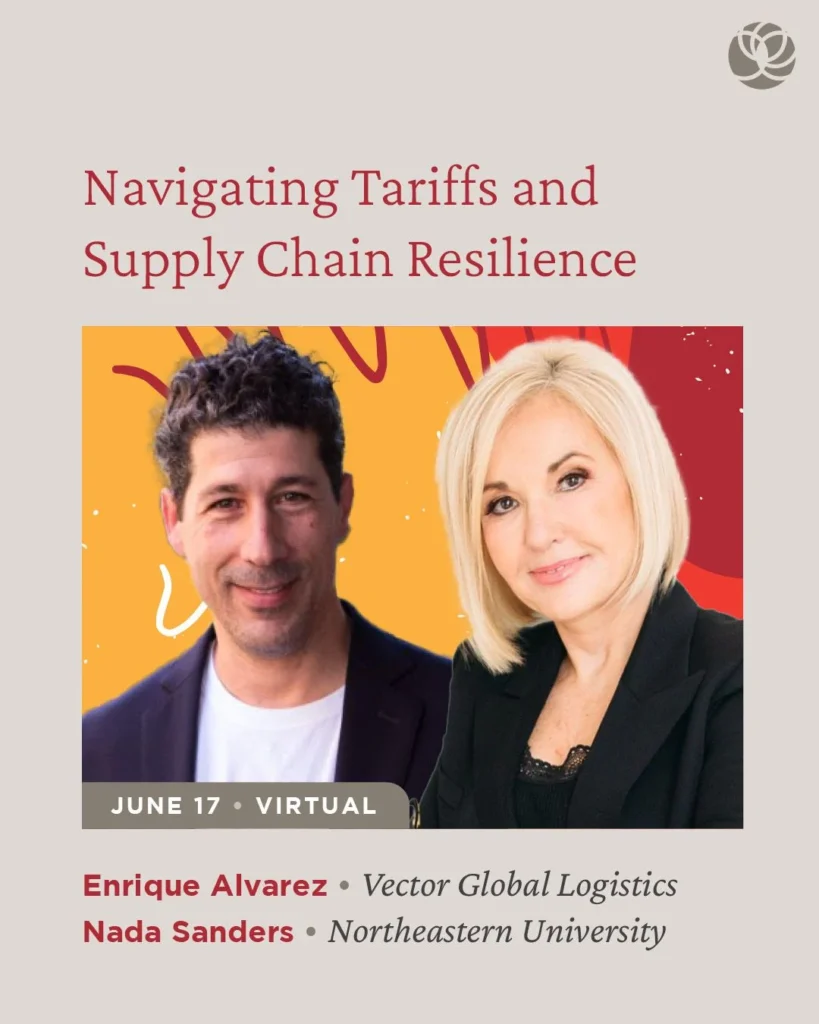
Last week, our Co-Founder and Managing Director, Enrique Alvarez, took part in a Conscious Capitalism Virtual Gathering, alongside Dr. Dana Sanders, where leaders explored how purpose, trust, and people-first thinking are transforming global business. The key takeaway? Trust is no longer a soft skill—it’s a strategic edge.
From supplier collaboration to AI-powered decision-making, the conversation unpacked how companies that build deep, trusting relationships across their ecosystem are more resilient, innovative, and equipped to thrive in today’s volatile markets.
Missed it live?
Watch the full recording here and take away 3 actionable strategies every CEO should be thinking about now.
4. Vector en la Ronda de Negocios con Propósito de Sistema B México
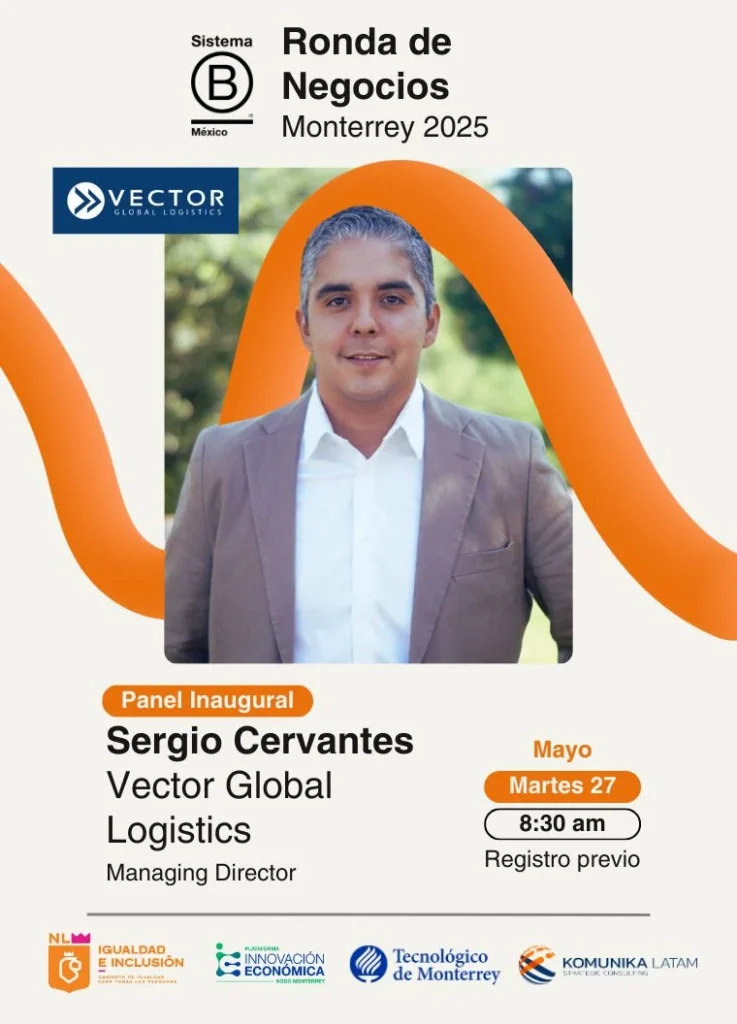
Nos enorgullece haber formado parte de la Ronda de Negocios: Cadenas de Valor más Fuertes con Igualdad e Inclusión, organizada por Sistema B México en Monterrey.
Nuestro Director en México, Sergio Alejandro Cervantes Rodríguez, participó en el panel inaugural junto a Leticia del Rosario Pacheco Tejeda (Grupo Bimbo), Jesús Francisco López (CAINTRA Nuevo León) y Aldahir Caballero (Tecnológico de Monterrey), reflexionando sobre los retos y oportunidades para construir cadenas de valor más resilientes, sostenibles e inclusivas.
Este tipo de espacios son clave para fortalecer alianzas y avanzar hacia un modelo de negocio más justo, colaborativo y regenerativo.
El mensaje fue claro: para transformar nuestras cadenas de suministro, debemos construir cadenas de valor más fuertes, humanas y sostenibles.
Sigamos sumando desde la logística con propósito.
Conoce más sobre esta jornada y lo que compartimos desde Vector, aquí.
5. Freight at a Crossroads: Why Shippers and Logistics Providers Must Rethink Everything
From volatile freight rates to nearshoring gaps and the slow adoption of GenAI, the global logistics landscape is being reshaped in real time. In a timely new report, Boston Consulting Group (BCG) and Alpega dig deep into what’s keeping shippers and logistics companies up at night, and what smart companies are doing to stay ahead.
Discover the five major forces driving disruption and the six bold moves both sides of the supply chain must make to remain competitive in a world of geopolitical tension, rising costs, and shifting sourcing patterns.
Read the full article and download the report here to get the data, insights, and strategies your business needs now.

Catch up on recent episodes of our Logistics With Purpose® podcast:
From Corporate to Conscious: Nathan Stuck’s Journey to Purpose-Driven Leadership
Business as a Force for Good: The Power of Stakeholder Capitalism